 EN
EN


Selecting high-quality rattan weave for commercial projects requires understanding the fundamental differences between natural and synthetic materials, their performance characteristics, and long-term durability requirements. Commercial environments demand rattan weave products that can withstand heavy use, frequent cleaning, and varying environmental conditions while maintaining their aesthetic appeal and structural integrity over extended periods.
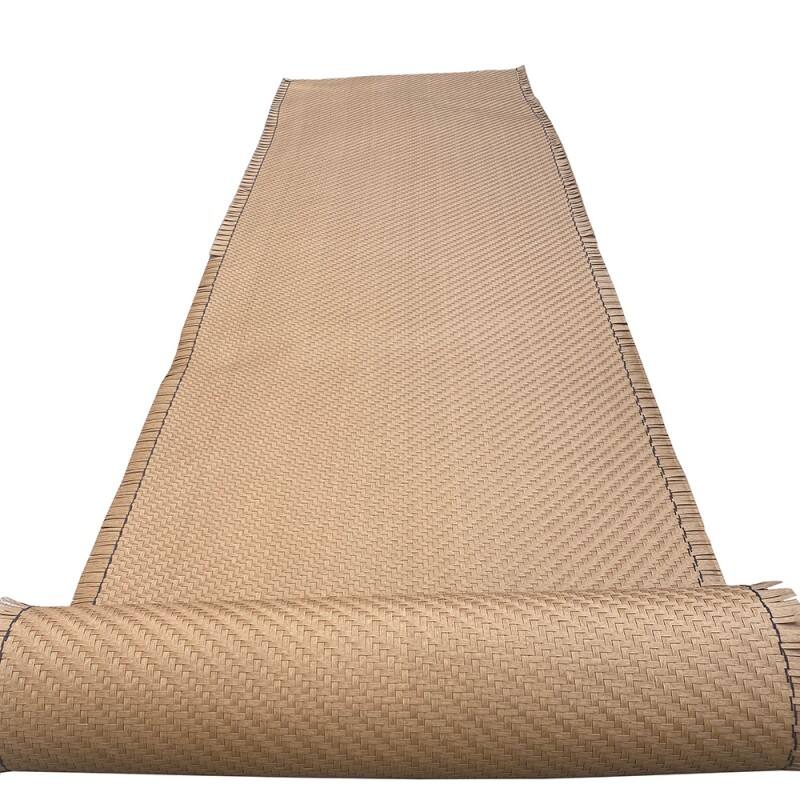
The selection process involves evaluating multiple technical and aesthetic factors that directly impact the success of commercial installations. Professional buyers must consider weave density, fiber quality, color stability, maintenance requirements, and compliance with commercial building standards. Understanding these selection criteria enables informed decisions that balance initial investment costs with long-term performance expectations and operational efficiency.
Material Quality Assessment Fundamentals
Fiber Construction and Durability Standards
High-quality rattan weave begins with the fundamental fiber construction that determines its overall durability and performance in commercial settings. Natural rattan fibers require proper harvesting, curing, and treatment processes to achieve commercial-grade stability. The diameter consistency of individual strands directly affects the uniformity of the weave pattern and its ability to maintain structural integrity under stress.
Synthetic rattan weave alternatives offer enhanced durability through engineered polymer compositions that resist moisture, UV degradation, and temperature fluctuations. These materials undergo rigorous testing for tensile strength, flexibility retention, and color fastness. Commercial-grade synthetic rattan weave typically features multi-layered construction with UV-resistant outer coatings and reinforced core structures.
Quality assessment involves examining the weave tightness, which affects both appearance and longevity. Loose weaves may develop gaps over time, while overly tight constructions can become brittle and prone to cracking. Professional specifications should include minimum density requirements and standardized testing protocols for mechanical stress resistance.
Surface Treatment and Protective Coatings
Commercial rattan weave products require specialized surface treatments to withstand the demanding conditions of high-traffic environments. Quality protective coatings provide resistance against staining, moisture penetration, and mechanical abrasion while maintaining the natural texture and appearance of the material. These treatments should be environmentally safe and compliant with indoor air quality standards for commercial buildings.
The application process for protective coatings significantly influences the final product quality. Multiple thin coating layers typically provide superior performance compared to single thick applications, ensuring even coverage and better adhesion. High-quality rattan weave features factory-applied treatments that penetrate the fiber structure rather than simply coating the surface.
Anti-microbial treatments are essential for commercial applications, particularly in healthcare, hospitality, and food service environments. These treatments should be integrated into the manufacturing process rather than applied as aftermarket solutions to ensure long-term effectiveness and compliance with health regulations.
Performance Evaluation and Testing Criteria
Environmental Resistance Requirements
Commercial rattan weave must demonstrate exceptional resistance to environmental factors that can cause premature degradation or aesthetic deterioration. UV stability testing reveals how well the material maintains its color and structural integrity when exposed to natural and artificial light sources. High-quality products undergo accelerated weathering tests that simulate years of exposure in compressed timeframes.
Moisture resistance capabilities are particularly critical for commercial applications where regular cleaning and occasional spills are inevitable. Quality rattan weave should resist water absorption, which can lead to dimensional instability, mold growth, and structural weakening. Hydrophobic treatments and inherently water-resistant materials provide the best long-term performance in commercial environments.
Temperature cycling tests evaluate how rattan weave responds to thermal expansion and contraction. Commercial buildings often experience significant temperature variations, and quality materials must maintain their dimensional stability and appearance across these ranges without cracking, warping, or developing stress points.
Mechanical Strength and Wear Resistance
The mechanical properties of rattan weave directly influence its suitability for different commercial applications. Tensile strength testing measures the material's resistance to pulling forces, which is crucial for applications where the weave may be subject to stretching or tension. Commercial-grade specifications typically require minimum strength values that exceed normal use conditions by significant safety margins.
Abrasion resistance testing simulates the wear patterns that occur in high-traffic commercial environments. Quality rattan weave maintains its appearance and structural integrity even after extended exposure to rubbing, cleaning, and general handling. The testing protocol should replicate the specific wear patterns expected in the intended application environment.
Impact resistance capabilities determine how well the material withstands sudden forces or accidental damage. Commercial environments often involve moving furniture, equipment, and general activity that can subject rattan weave to impact loads. Quality materials demonstrate resilience without permanent deformation or visible damage under normal impact conditions.
Design Integration and Aesthetic Considerations
Pattern Consistency and Visual Quality
Professional rattan weave selection requires careful evaluation of pattern consistency across large installation areas. Manufacturing variations can create noticeable differences in weave density, color, and texture that become apparent when multiple panels or sections are installed together. Quality control processes should ensure batch-to-batch consistency that maintains visual continuity across extensive commercial projects.
The uniformity of individual fiber dimensions significantly affects the overall appearance quality. High-grade rattan weave features consistent strand thickness, uniform spacing, and regular pattern repetition that creates a professional, refined appearance suitable for commercial environments. Irregularities that might be acceptable in residential applications can appear unprofessional in commercial settings.
Color matching capabilities become critical when projects require multiple shipments or future additions to existing installations. Quality manufacturers maintain color standards and documentation that enable accurate matching over time. Digital color measurement and standardized reference systems help ensure consistency across different production runs.
Architectural Compatibility and Installation Flexibility
Commercial rattan weave must integrate seamlessly with existing architectural elements and design themes. The material's visual weight, texture scale, and color characteristics should complement rather than compete with other interior or exterior finishes. Professional designers evaluate how the weave pattern interacts with lighting conditions, viewing distances, and adjacent materials.
Installation flexibility affects both initial project costs and long-term maintenance requirements. Quality rattan weave products offer multiple mounting options, edge finishing solutions, and modular configurations that accommodate various architectural constraints. The material should adapt to curved surfaces, irregular dimensions, and standard building grid systems without compromising appearance or performance.
Dimensional stability during installation prevents problems such as gapping, buckling, or alignment issues that can occur with lower-quality materials. Professional specifications should include allowances for thermal expansion, moisture changes, and settling that may occur after installation. Quality materials maintain their installed appearance over time without requiring frequent adjustments or repairs.
Maintenance and Lifecycle Cost Analysis
Cleaning and Care Requirements
Commercial rattan weave maintenance requirements directly impact long-term operational costs and aesthetic preservation. Quality materials should accommodate standard commercial cleaning procedures without special equipment, chemicals, or extensive labor requirements. The cleaning protocols should be practical for facility management staff and compatible with existing maintenance schedules.
Stain resistance capabilities reduce the frequency and intensity of cleaning required to maintain acceptable appearance standards. High-quality rattan weave resists common commercial stains including food, beverages, ink, and cleaning chemicals. The material should allow prompt stain removal without permanent discoloration or surface damage that requires replacement.
Regular maintenance procedures should preserve both the appearance and protective properties of the rattan weave over its intended service life. Quality materials maintain their performance characteristics through repeated cleaning cycles without degradation of surface treatments, color stability, or structural integrity. Documentation of proper maintenance procedures helps ensure warranty compliance and optimal performance.
Replacement and Repair Considerations
Long-term maintenance planning must account for the availability of matching replacement materials when repairs or modifications become necessary. Quality manufacturers maintain consistent product lines and color standards that enable partial replacements without compromising the overall installation appearance. Modular design approaches facilitate targeted repairs rather than complete reinstallation.
The repairability of rattan weave affects both maintenance costs and downtime requirements for commercial facilities. Quality materials should allow localized repairs that restore both appearance and performance without extensive surrounding work. Repair procedures should be practical for qualified maintenance personnel using standard tools and techniques.
End-of-life disposal considerations increasingly influence commercial material selection decisions. Quality rattan weave products should support sustainable disposal methods, recycling opportunities, or environmentally responsible replacement strategies. Natural materials offer biodegradability advantages, while synthetic alternatives may provide recycling benefits depending on their polymer composition.
FAQ
What is the typical lifespan of high-quality rattan weave in commercial applications?
High-quality rattan weave in commercial environments typically provides 10-15 years of service life when properly selected, installed, and maintained. Synthetic alternatives may extend this to 15-20 years, while natural materials generally require replacement sooner due to environmental factors. The actual lifespan depends heavily on traffic levels, environmental conditions, and maintenance quality.
How do synthetic and natural rattan weave compare for commercial durability?
Synthetic rattan weave generally offers superior durability for commercial applications due to enhanced moisture resistance, UV stability, and consistent manufacturing quality. Natural rattan provides authentic appearance and sustainability benefits but requires more careful environmental control and maintenance. Most commercial projects favor synthetic materials for their predictable performance and lower maintenance requirements.
What testing certifications should commercial rattan weave products have?
Commercial rattan weave should meet relevant ASTM or ISO standards for flame resistance, mechanical properties, and environmental performance. Indoor applications require compliance with low-emission standards for formaldehyde and VOCs. Outdoor installations need UV resistance certification and weathering test results. Fire safety certifications are essential for most commercial building codes.
How should rattan weave samples be evaluated before making large commercial purchases?
Evaluation should include physical handling to assess texture, flexibility, and construction quality. Visual inspection under different lighting conditions reveals color consistency and pattern regularity. Testing samples with intended cleaning products ensures compatibility. Installing small test sections allows assessment of actual appearance in the intended environment before committing to large quantities.
Table of Contents
- Material Quality Assessment Fundamentals
- Performance Evaluation and Testing Criteria
- Design Integration and Aesthetic Considerations
- Maintenance and Lifecycle Cost Analysis
-
FAQ
- What is the typical lifespan of high-quality rattan weave in commercial applications?
- How do synthetic and natural rattan weave compare for commercial durability?
- What testing certifications should commercial rattan weave products have?
- How should rattan weave samples be evaluated before making large commercial purchases?